•  
Illustration Louvre

Illustration Louvre

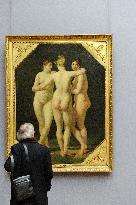
FRANCE, PARIS (75) 1ST DISTRICT, LOUVRE MUSEUM, RICHELIEU AND SULLY ROOMS, PAINTINGS FRANCE, THE THREE GRACES OIL ON CANVAS BY JEAN-BAPTISTE REGNAULT IN 1793-1794

  •  
Illustration - Louvre Museum

Illustration - Louvre Museum

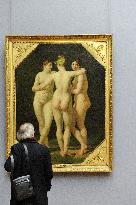
FRANCE, PARIS (75) 1ST DISTRICT, LOUVRE MUSEUM, RICHELIEU AND SULLY ROOMS, PAINTINGS FRANCE, THE THREE GRACES OIL ON CANVAS BY JEAN-BAPTISTE REGNAULT IN 1793-1794 Photo by Jarry Tripelon/Only Paris/ABACAPRESS.COM

  •  
Illustration - Loire Valley

Illustration - Loire Valley

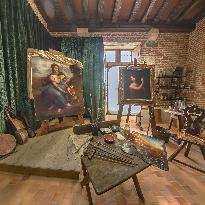
FRANCE - LOIRE VALLEY - INDRE ET LOIRE (37) - CASTLE OF CLOS LUCE : RECONSTITUTION OF THE PAINTER'S STUDIO. LEONARDO DA VINCI ARRIVED IN FRANCE IN 1516 WITH THREE OF HIS MAJOR PAINTINGS: THE VIRGIN, THE CHILD JESUS AND SAINT ANNE, WHO WILL REMAIN UNFINISHED (LEFT), SAINT JOHN THE BAPTIST, WHOM HE FINISHES AT CLOS LUCE (ON THE RIGHT), AND THE MONA LISA. Photo by Stephane Compoint/Only France/ABACAPRESS.COM

  •  
Illustration - Loire Valley

Illustration - Loire Valley

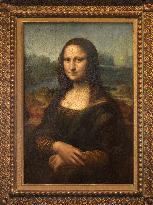
FRANCE - LOIRE VALLEY - INDRE ET LOIRE (37) - CASTLE OF CLOS LUCE : COUNCIL ROOM, FURNISHED IN THE STYLE OF THE TIME. IT IS HERE THAT THE ARTIST RECEIVED HIS DISTINGUISHED GUESTS, NOTABLY KING FRANCOIS 1ER. LEONARDO DA VINCI ARRIVED IN FRANCE IN 1516 WITH THREE OF HIS MAJOR PAINTINGS: THE VIRGIN, THE CHILD JESUS AND ST. ANNE, ST. JOHN THE BAPTIST, AND THE MONA LISA (PHOTO). Photo by Stephane Compoint/Only France/ABACAPRESS.COM

  •  
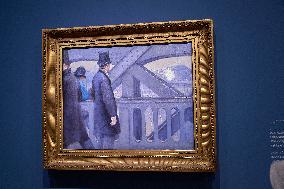
Gustave Caillebotte Retrospective - Paris

Gustave Caillebotte Retrospective - Paris

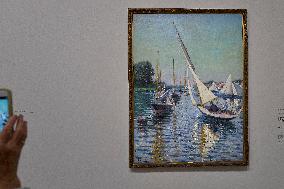
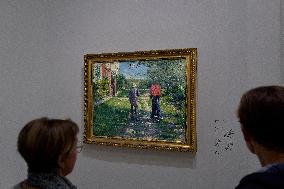
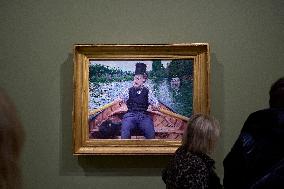
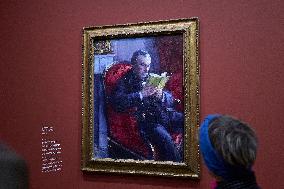
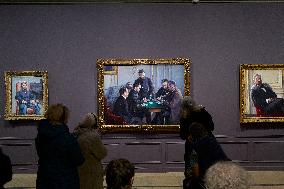
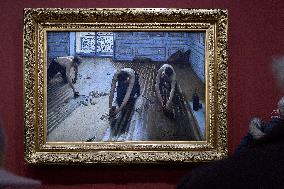
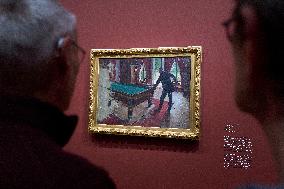
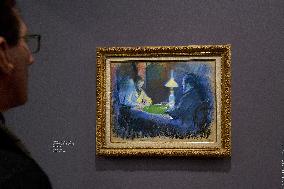
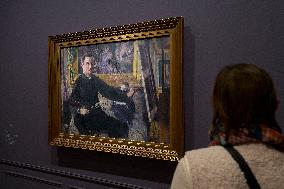
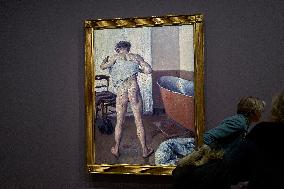
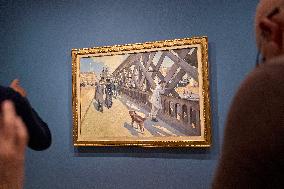
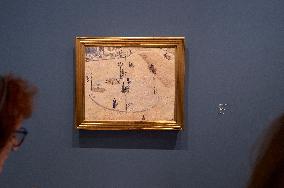
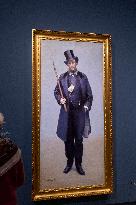
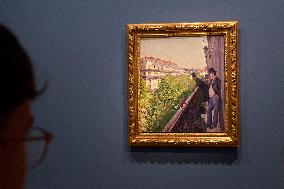
Visitors look on Gustave Caillebotte’s paintings at the Musee d’Orsay on November 27, 2024 in Paris, France. For around a century, Gustave Caillebotte was the most discreet of the Impressionists, only coming back into the spotlight in 1994, when the Grand Palais in Paris celebrated the centenary of his death in 1894 through a memorable retrospective. Ever since, the French painter has been the subject of several exhibitions from London to Washington, D.C. to Switzerland. Now, the Musee d’Orsay in Paris, the J. Paul Getty Museum in Los Angeles, and the Art Institute of Chicago have joined forces to examine Caillebotte anew, with a sweeping retrospective “Painting Men,” which runs through January in Paris, before heading to LA next spring and then Chicago next summer. Despite the acclaim the artist has received over the past three decades, he still remains a bit of a mystery, a major focus of the exhibition which also coincides with the 130th anniversary of the artist’s passing. Photo by Jean Pierre Nguyen Van

  •  
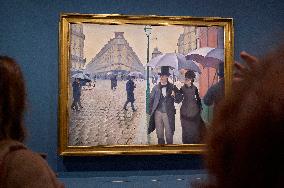
Gustave Caillebotte Retrospective - Paris

Gustave Caillebotte Retrospective - Paris

Visitors look on Gustave Caillebotte’s paintings at the Musee d’Orsay on November 27, 2024 in Paris, France. For around a century, Gustave Caillebotte was the most discreet of the Impressionists, only coming back into the spotlight in 1994, when the Grand Palais in Paris celebrated the centenary of his death in 1894 through a memorable retrospective. Ever since, the French painter has been the subject of several exhibitions from London to Washington, D.C. to Switzerland. Now, the Musee d’Orsay in Paris, the J. Paul Getty Museum in Los Angeles, and the Art Institute of Chicago have joined forces to examine Caillebotte anew, with a sweeping retrospective “Painting Men,” which runs through January in Paris, before heading to LA next spring and then Chicago next summer. Despite the acclaim the artist has received over the past three decades, he still remains a bit of a mystery, a major focus of the exhibition which also coincides with the 130th anniversary of the artist’s passing. Photo by Jean Pierre Nguyen Van

  •  
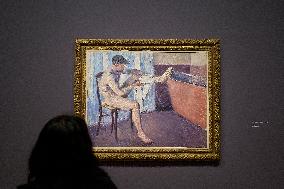
Gustave Caillebotte Retrospective - Paris

Gustave Caillebotte Retrospective - Paris

Visitors look on Gustave Caillebotte’s paintings at the Musee d’Orsay on November 27, 2024 in Paris, France. For around a century, Gustave Caillebotte was the most discreet of the Impressionists, only coming back into the spotlight in 1994, when the Grand Palais in Paris celebrated the centenary of his death in 1894 through a memorable retrospective. Ever since, the French painter has been the subject of several exhibitions from London to Washington, D.C. to Switzerland. Now, the Musee d’Orsay in Paris, the J. Paul Getty Museum in Los Angeles, and the Art Institute of Chicago have joined forces to examine Caillebotte anew, with a sweeping retrospective “Painting Men,” which runs through January in Paris, before heading to LA next spring and then Chicago next summer. Despite the acclaim the artist has received over the past three decades, he still remains a bit of a mystery, a major focus of the exhibition which also coincides with the 130th anniversary of the artist’s passing. Photo by Jean Pierre Nguyen Van

  •  
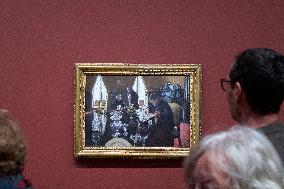
Gustave Caillebotte Retrospective - Paris

Gustave Caillebotte Retrospective - Paris

Visitors look on Gustave Caillebotte’s paintings at the Musee d’Orsay on November 27, 2024 in Paris, France. For around a century, Gustave Caillebotte was the most discreet of the Impressionists, only coming back into the spotlight in 1994, when the Grand Palais in Paris celebrated the centenary of his death in 1894 through a memorable retrospective. Ever since, the French painter has been the subject of several exhibitions from London to Washington, D.C. to Switzerland. Now, the Musee d’Orsay in Paris, the J. Paul Getty Museum in Los Angeles, and the Art Institute of Chicago have joined forces to examine Caillebotte anew, with a sweeping retrospective “Painting Men,” which runs through January in Paris, before heading to LA next spring and then Chicago next summer. Despite the acclaim the artist has received over the past three decades, he still remains a bit of a mystery, a major focus of the exhibition which also coincides with the 130th anniversary of the artist’s passing. Photo by Jean Pierre Nguyen Van

  •  
Gustave Caillebotte Retrospective - Paris

Gustave Caillebotte Retrospective - Paris

Visitors look on Gustave Caillebotte’s paintings at the Musee d’Orsay on November 27, 2024 in Paris, France. For around a century, Gustave Caillebotte was the most discreet of the Impressionists, only coming back into the spotlight in 1994, when the Grand Palais in Paris celebrated the centenary of his death in 1894 through a memorable retrospective. Ever since, the French painter has been the subject of several exhibitions from London to Washington, D.C. to Switzerland. Now, the Musee d’Orsay in Paris, the J. Paul Getty Museum in Los Angeles, and the Art Institute of Chicago have joined forces to examine Caillebotte anew, with a sweeping retrospective “Painting Men,” which runs through January in Paris, before heading to LA next spring and then Chicago next summer. Despite the acclaim the artist has received over the past three decades, he still remains a bit of a mystery, a major focus of the exhibition which also coincides with the 130th anniversary of the artist’s passing. Photo by Jean Pierre Nguyen Van

  •  
Gustave Caillebotte Retrospective - Paris

Gustave Caillebotte Retrospective - Paris

Visitors look on Gustave Caillebotte’s paintings at the Musee d’Orsay on November 27, 2024 in Paris, France. For around a century, Gustave Caillebotte was the most discreet of the Impressionists, only coming back into the spotlight in 1994, when the Grand Palais in Paris celebrated the centenary of his death in 1894 through a memorable retrospective. Ever since, the French painter has been the subject of several exhibitions from London to Washington, D.C. to Switzerland. Now, the Musee d’Orsay in Paris, the J. Paul Getty Museum in Los Angeles, and the Art Institute of Chicago have joined forces to examine Caillebotte anew, with a sweeping retrospective “Painting Men,” which runs through January in Paris, before heading to LA next spring and then Chicago next summer. Despite the acclaim the artist has received over the past three decades, he still remains a bit of a mystery, a major focus of the exhibition which also coincides with the 130th anniversary of the artist’s passing. Photo by Jean Pierre Nguyen Van

  •  
Gustave Caillebotte Retrospective - Paris

Gustave Caillebotte Retrospective - Paris

Visitors look on Gustave Caillebotte’s paintings at the Musee d’Orsay on November 27, 2024 in Paris, France. For around a century, Gustave Caillebotte was the most discreet of the Impressionists, only coming back into the spotlight in 1994, when the Grand Palais in Paris celebrated the centenary of his death in 1894 through a memorable retrospective. Ever since, the French painter has been the subject of several exhibitions from London to Washington, D.C. to Switzerland. Now, the Musee d’Orsay in Paris, the J. Paul Getty Museum in Los Angeles, and the Art Institute of Chicago have joined forces to examine Caillebotte anew, with a sweeping retrospective “Painting Men,” which runs through January in Paris, before heading to LA next spring and then Chicago next summer. Despite the acclaim the artist has received over the past three decades, he still remains a bit of a mystery, a major focus of the exhibition which also coincides with the 130th anniversary of the artist’s passing. Photo by Jean Pierre Nguyen Van

  •  
Gustave Caillebotte Retrospective - Paris

Gustave Caillebotte Retrospective - Paris

Visitors look on Gustave Caillebotte’s paintings at the Musee d’Orsay on November 27, 2024 in Paris, France. For around a century, Gustave Caillebotte was the most discreet of the Impressionists, only coming back into the spotlight in 1994, when the Grand Palais in Paris celebrated the centenary of his death in 1894 through a memorable retrospective. Ever since, the French painter has been the subject of several exhibitions from London to Washington, D.C. to Switzerland. Now, the Musee d’Orsay in Paris, the J. Paul Getty Museum in Los Angeles, and the Art Institute of Chicago have joined forces to examine Caillebotte anew, with a sweeping retrospective “Painting Men,” which runs through January in Paris, before heading to LA next spring and then Chicago next summer. Despite the acclaim the artist has received over the past three decades, he still remains a bit of a mystery, a major focus of the exhibition which also coincides with the 130th anniversary of the artist’s passing. Photo by Jean Pierre Nguyen Van

  •  
Gustave Caillebotte Retrospective - Paris

Gustave Caillebotte Retrospective - Paris

Visitors look on Gustave Caillebotte’s paintings at the Musee d’Orsay on November 27, 2024 in Paris, France. For around a century, Gustave Caillebotte was the most discreet of the Impressionists, only coming back into the spotlight in 1994, when the Grand Palais in Paris celebrated the centenary of his death in 1894 through a memorable retrospective. Ever since, the French painter has been the subject of several exhibitions from London to Washington, D.C. to Switzerland. Now, the Musee d’Orsay in Paris, the J. Paul Getty Museum in Los Angeles, and the Art Institute of Chicago have joined forces to examine Caillebotte anew, with a sweeping retrospective “Painting Men,” which runs through January in Paris, before heading to LA next spring and then Chicago next summer. Despite the acclaim the artist has received over the past three decades, he still remains a bit of a mystery, a major focus of the exhibition which also coincides with the 130th anniversary of the artist’s passing. Photo by Jean Pierre Nguyen Van

  •  
Gustave Caillebotte Retrospective - Paris

Gustave Caillebotte Retrospective - Paris

Visitors look on Gustave Caillebotte’s paintings at the Musee d’Orsay on November 27, 2024 in Paris, France. For around a century, Gustave Caillebotte was the most discreet of the Impressionists, only coming back into the spotlight in 1994, when the Grand Palais in Paris celebrated the centenary of his death in 1894 through a memorable retrospective. Ever since, the French painter has been the subject of several exhibitions from London to Washington, D.C. to Switzerland. Now, the Musee d’Orsay in Paris, the J. Paul Getty Museum in Los Angeles, and the Art Institute of Chicago have joined forces to examine Caillebotte anew, with a sweeping retrospective “Painting Men,” which runs through January in Paris, before heading to LA next spring and then Chicago next summer. Despite the acclaim the artist has received over the past three decades, he still remains a bit of a mystery, a major focus of the exhibition which also coincides with the 130th anniversary of the artist’s passing. Photo by Jean Pierre Nguyen Van

  •  
Gustave Caillebotte Retrospective - Paris

Gustave Caillebotte Retrospective - Paris

Visitors look on Gustave Caillebotte’s paintings at the Musee d’Orsay on November 27, 2024 in Paris, France. For around a century, Gustave Caillebotte was the most discreet of the Impressionists, only coming back into the spotlight in 1994, when the Grand Palais in Paris celebrated the centenary of his death in 1894 through a memorable retrospective. Ever since, the French painter has been the subject of several exhibitions from London to Washington, D.C. to Switzerland. Now, the Musee d’Orsay in Paris, the J. Paul Getty Museum in Los Angeles, and the Art Institute of Chicago have joined forces to examine Caillebotte anew, with a sweeping retrospective “Painting Men,” which runs through January in Paris, before heading to LA next spring and then Chicago next summer. Despite the acclaim the artist has received over the past three decades, he still remains a bit of a mystery, a major focus of the exhibition which also coincides with the 130th anniversary of the artist’s passing. Photo by Jean Pierre Nguyen Van

  •  
Gustave Caillebotte Retrospective - Paris

Gustave Caillebotte Retrospective - Paris

Visitors look on Gustave Caillebotte’s paintings at the Musee d’Orsay on November 27, 2024 in Paris, France. For around a century, Gustave Caillebotte was the most discreet of the Impressionists, only coming back into the spotlight in 1994, when the Grand Palais in Paris celebrated the centenary of his death in 1894 through a memorable retrospective. Ever since, the French painter has been the subject of several exhibitions from London to Washington, D.C. to Switzerland. Now, the Musee d’Orsay in Paris, the J. Paul Getty Museum in Los Angeles, and the Art Institute of Chicago have joined forces to examine Caillebotte anew, with a sweeping retrospective “Painting Men,” which runs through January in Paris, before heading to LA next spring and then Chicago next summer. Despite the acclaim the artist has received over the past three decades, he still remains a bit of a mystery, a major focus of the exhibition which also coincides with the 130th anniversary of the artist’s passing. Photo by Jean Pierre Nguyen Van

  •  
Gustave Caillebotte Retrospective - Paris

Gustave Caillebotte Retrospective - Paris

Visitors look on Gustave Caillebotte’s paintings at the Musee d’Orsay on November 27, 2024 in Paris, France. For around a century, Gustave Caillebotte was the most discreet of the Impressionists, only coming back into the spotlight in 1994, when the Grand Palais in Paris celebrated the centenary of his death in 1894 through a memorable retrospective. Ever since, the French painter has been the subject of several exhibitions from London to Washington, D.C. to Switzerland. Now, the Musee d’Orsay in Paris, the J. Paul Getty Museum in Los Angeles, and the Art Institute of Chicago have joined forces to examine Caillebotte anew, with a sweeping retrospective “Painting Men,” which runs through January in Paris, before heading to LA next spring and then Chicago next summer. Despite the acclaim the artist has received over the past three decades, he still remains a bit of a mystery, a major focus of the exhibition which also coincides with the 130th anniversary of the artist’s passing. Photo by Jean Pierre Nguyen Van

  •  
Gustave Caillebotte Retrospective - Paris

Gustave Caillebotte Retrospective - Paris

Visitors look on Gustave Caillebotte’s paintings at the Musee d’Orsay on November 27, 2024 in Paris, France. For around a century, Gustave Caillebotte was the most discreet of the Impressionists, only coming back into the spotlight in 1994, when the Grand Palais in Paris celebrated the centenary of his death in 1894 through a memorable retrospective. Ever since, the French painter has been the subject of several exhibitions from London to Washington, D.C. to Switzerland. Now, the Musee d’Orsay in Paris, the J. Paul Getty Museum in Los Angeles, and the Art Institute of Chicago have joined forces to examine Caillebotte anew, with a sweeping retrospective “Painting Men,” which runs through January in Paris, before heading to LA next spring and then Chicago next summer. Despite the acclaim the artist has received over the past three decades, he still remains a bit of a mystery, a major focus of the exhibition which also coincides with the 130th anniversary of the artist’s passing. Photo by Jean Pierre Nguyen Van

  •  
Gustave Caillebotte Retrospective - Paris

Gustave Caillebotte Retrospective - Paris

Visitors look on Gustave Caillebotte’s paintings at the Musee d’Orsay on November 27, 2024 in Paris, France. For around a century, Gustave Caillebotte was the most discreet of the Impressionists, only coming back into the spotlight in 1994, when the Grand Palais in Paris celebrated the centenary of his death in 1894 through a memorable retrospective. Ever since, the French painter has been the subject of several exhibitions from London to Washington, D.C. to Switzerland. Now, the Musee d’Orsay in Paris, the J. Paul Getty Museum in Los Angeles, and the Art Institute of Chicago have joined forces to examine Caillebotte anew, with a sweeping retrospective “Painting Men,” which runs through January in Paris, before heading to LA next spring and then Chicago next summer. Despite the acclaim the artist has received over the past three decades, he still remains a bit of a mystery, a major focus of the exhibition which also coincides with the 130th anniversary of the artist’s passing. Photo by Jean Pierre Nguyen Van

  •  
Gustave Caillebotte Retrospective - Paris

Gustave Caillebotte Retrospective - Paris

Visitors look on Gustave Caillebotte’s paintings at the Musee d’Orsay on November 27, 2024 in Paris, France. For around a century, Gustave Caillebotte was the most discreet of the Impressionists, only coming back into the spotlight in 1994, when the Grand Palais in Paris celebrated the centenary of his death in 1894 through a memorable retrospective. Ever since, the French painter has been the subject of several exhibitions from London to Washington, D.C. to Switzerland. Now, the Musee d’Orsay in Paris, the J. Paul Getty Museum in Los Angeles, and the Art Institute of Chicago have joined forces to examine Caillebotte anew, with a sweeping retrospective “Painting Men,” which runs through January in Paris, before heading to LA next spring and then Chicago next summer. Despite the acclaim the artist has received over the past three decades, he still remains a bit of a mystery, a major focus of the exhibition which also coincides with the 130th anniversary of the artist’s passing. Photo by Jean Pierre Nguyen Van

  •  
Gustave Caillebotte Retrospective - Paris

Gustave Caillebotte Retrospective - Paris

Visitors look on Gustave Caillebotte’s paintings at the Musee d’Orsay on November 27, 2024 in Paris, France. For around a century, Gustave Caillebotte was the most discreet of the Impressionists, only coming back into the spotlight in 1994, when the Grand Palais in Paris celebrated the centenary of his death in 1894 through a memorable retrospective. Ever since, the French painter has been the subject of several exhibitions from London to Washington, D.C. to Switzerland. Now, the Musee d’Orsay in Paris, the J. Paul Getty Museum in Los Angeles, and the Art Institute of Chicago have joined forces to examine Caillebotte anew, with a sweeping retrospective “Painting Men,” which runs through January in Paris, before heading to LA next spring and then Chicago next summer. Despite the acclaim the artist has received over the past three decades, he still remains a bit of a mystery, a major focus of the exhibition which also coincides with the 130th anniversary of the artist’s passing. Photo by Jean Pierre Nguyen Van

  •  
Gustave Caillebotte Retrospective - Paris

Gustave Caillebotte Retrospective - Paris

Visitors look on Gustave Caillebotte’s paintings at the Musee d’Orsay on November 27, 2024 in Paris, France. For around a century, Gustave Caillebotte was the most discreet of the Impressionists, only coming back into the spotlight in 1994, when the Grand Palais in Paris celebrated the centenary of his death in 1894 through a memorable retrospective. Ever since, the French painter has been the subject of several exhibitions from London to Washington, D.C. to Switzerland. Now, the Musee d’Orsay in Paris, the J. Paul Getty Museum in Los Angeles, and the Art Institute of Chicago have joined forces to examine Caillebotte anew, with a sweeping retrospective “Painting Men,” which runs through January in Paris, before heading to LA next spring and then Chicago next summer. Despite the acclaim the artist has received over the past three decades, he still remains a bit of a mystery, a major focus of the exhibition which also coincides with the 130th anniversary of the artist’s passing. Photo by Jean Pierre Nguyen Van

  •  
Gustave Caillebotte Retrospective - Paris

Gustave Caillebotte Retrospective - Paris

Visitors look on Gustave Caillebotte’s paintings at the Musee d’Orsay on November 27, 2024 in Paris, France. For around a century, Gustave Caillebotte was the most discreet of the Impressionists, only coming back into the spotlight in 1994, when the Grand Palais in Paris celebrated the centenary of his death in 1894 through a memorable retrospective. Ever since, the French painter has been the subject of several exhibitions from London to Washington, D.C. to Switzerland. Now, the Musee d’Orsay in Paris, the J. Paul Getty Museum in Los Angeles, and the Art Institute of Chicago have joined forces to examine Caillebotte anew, with a sweeping retrospective “Painting Men,” which runs through January in Paris, before heading to LA next spring and then Chicago next summer. Despite the acclaim the artist has received over the past three decades, he still remains a bit of a mystery, a major focus of the exhibition which also coincides with the 130th anniversary of the artist’s passing. Photo by Jean Pierre Nguyen Van

  •  
(MASTER OF CRAFTS)CHINA-JADE CARVING-INHERITOR-STUDIO (CN)

(MASTER OF CRAFTS)CHINA-JADE CARVING-INHERITOR-STUDIO (CN)

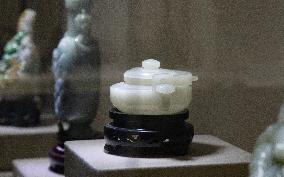
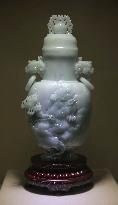
(240625) -- BEIJING, June 25, 2024 Photo by Xinhua/ABACAPRESS.COM) -- Jade carving artworks are displayed at Zhang Tiecheng's studio in Beijing, capital of China, June 15, 2024. China's Jade carving art, which can date back to the Neolithic Age, reached its peak time in the Ming and Qing dynasties (1368-1911). The art was inscribed into the national intangible cultural heritage list in 2008. Selecting materials, designing and carving are the three major steps involved in jade carving. The craftsmen should have mastery in painting, carving and literature in order to complete an artwork, which is designed and carved according to the material itself and the aspiration of the artist. Most of the jade carving artworks convey auspicious meanings. Zhang Tiecheng, a master of the jade carving art born in Beijing in 1967, has devoted his love to traditional Chinese paintings since childhood. In 1987, he was enrolled in the Beijing Jade Articles Factory and became an apprentice of master Wang Yaotang. In his over 30 ye

  •  
(MASTER OF CRAFTS)CHINA-JADE CARVING-INHERITOR-STUDIO (CN)

(MASTER OF CRAFTS)CHINA-JADE CARVING-INHERITOR-STUDIO (CN)

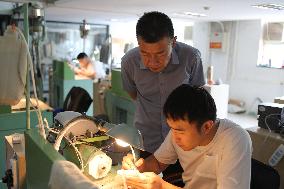
(240625) -- BEIJING, June 25, 2024 Photo by Xinhua/ABACAPRESS.COM) -- Zhang Tiecheng (L) guides an apprentice at his studio in Beijing, capital of China, June 15, 2024. China's Jade carving art, which can date back to the Neolithic Age, reached its peak time in the Ming and Qing dynasties (1368-1911). The art was inscribed into the national intangible cultural heritage list in 2008. Selecting materials, designing and carving are the three major steps involved in jade carving. The craftsmen should have mastery in painting, carving and literature in order to complete an artwork, which is designed and carved according to the material itself and the aspiration of the artist. Most of the jade carving artworks convey auspicious meanings. Zhang Tiecheng, a master of the jade carving art born in Beijing in 1967, has devoted his love to traditional Chinese paintings since childhood. In 1987, he was enrolled in the Beijing Jade Articles Factory and became an apprentice of master Wang Yaotang. In his over 30 years' care

  •  
(MASTER OF CRAFTS)CHINA-JADE CARVING-INHERITOR-STUDIO (CN)

(MASTER OF CRAFTS)CHINA-JADE CARVING-INHERITOR-STUDIO (CN)

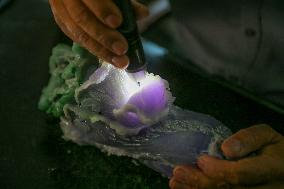
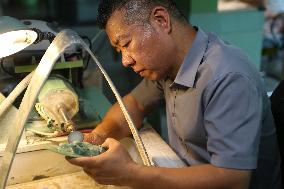
(240625) -- BEIJING, June 25, 2024 Photo by Xinhua/ABACAPRESS.COM) -- Zhang Tiecheng checks the quality of a jade carving work at his studio in Beijing, capital of China, June 15, 2024. China's Jade carving art, which can date back to the Neolithic Age, reached its peak time in the Ming and Qing dynasties (1368-1911). The art was inscribed into the national intangible cultural heritage list in 2008. Selecting materials, designing and carving are the three major steps involved in jade carving. The craftsmen should have mastery in painting, carving and literature in order to complete an artwork, which is designed and carved according to the material itself and the aspiration of the artist. Most of the jade carving artworks convey auspicious meanings. Zhang Tiecheng, a master of the jade carving art born in Beijing in 1967, has devoted his love to traditional Chinese paintings since childhood. In 1987, he was enrolled in the Beijing Jade Articles Factory and became an apprentice of master Wang Yaotang. In his ov

  •  
(MASTER OF CRAFTS)CHINA-JADE CARVING-INHERITOR-STUDIO (CN)

(MASTER OF CRAFTS)CHINA-JADE CARVING-INHERITOR-STUDIO (CN)

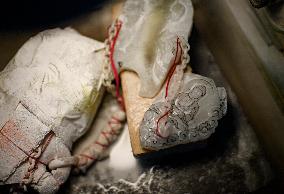
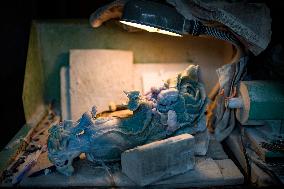
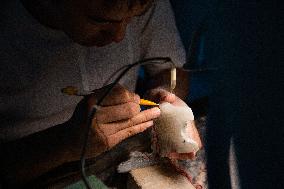
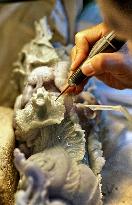
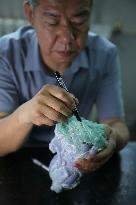
(240625) -- BEIJING, June 25, 2024 Photo by Xinhua/ABACAPRESS.COM) -- A semi-finished jade carving work is seen at Zhang Tiecheng's studio in Beijing, capital of China, June 15, 2024. China's Jade carving art, which can date back to the Neolithic Age, reached its peak time in the Ming and Qing dynasties (1368-1911). The art was inscribed into the national intangible cultural heritage list in 2008. Selecting materials, designing and carving are the three major steps involved in jade carving. The craftsmen should have mastery in painting, carving and literature in order to complete an artwork, which is designed and carved according to the material itself and the aspiration of the artist. Most of the jade carving artworks convey auspicious meanings. Zhang Tiecheng, a master of the jade carving art born in Beijing in 1967, has devoted his love to traditional Chinese paintings since childhood. In 1987, he was enrolled in the Beijing Jade Articles Factory and became an apprentice of master Wang Yaotang. In his over

  •  
(MASTER OF CRAFTS)CHINA-JADE CARVING-INHERITOR-STUDIO (CN)

(MASTER OF CRAFTS)CHINA-JADE CARVING-INHERITOR-STUDIO (CN)

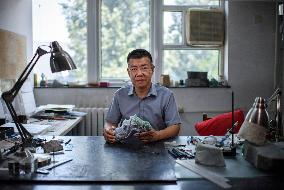
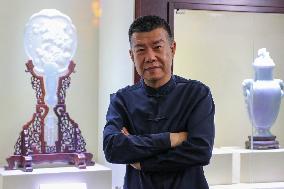
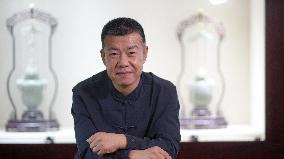
(240625) -- BEIJING, June 25, 2024 Photo by Xinhua/ABACAPRESS.COM) -- Zhang Tiecheng poses for a photo at his studio in Beijing, capital of China, June 15, 2024. China's Jade carving art, which can date back to the Neolithic Age, reached its peak time in the Ming and Qing dynasties (1368-1911). The art was inscribed into the national intangible cultural heritage list in 2008. Selecting materials, designing and carving are the three major steps involved in jade carving. The craftsmen should have mastery in painting, carving and literature in order to complete an artwork, which is designed and carved according to the material itself and the aspiration of the artist. Most of the jade carving artworks convey auspicious meanings. Zhang Tiecheng, a master of the jade carving art born in Beijing in 1967, has devoted his love to traditional Chinese paintings since childhood. In 1987, he was enrolled in the Beijing Jade Articles Factory and became an apprentice of master Wang Yaotang. In his over 30 years' career, Zha

  •  
(MASTER OF CRAFTS)CHINA-JADE CARVING-INHERITOR-STUDIO (CN)

(MASTER OF CRAFTS)CHINA-JADE CARVING-INHERITOR-STUDIO (CN)

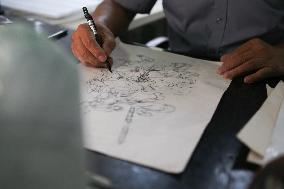
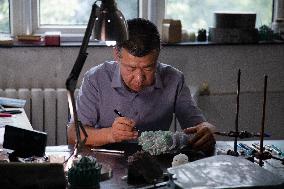
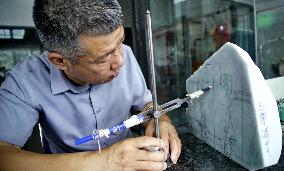
(240625) -- BEIJING, June 25, 2024 Photo by Xinhua/ABACAPRESS.COM) -- Zhang Tiecheng draws a pattern for jade carving at his studio in Beijing, capital of China, June 15, 2024. China's Jade carving art, which can date back to the Neolithic Age, reached its peak time in the Ming and Qing dynasties (1368-1911). The art was inscribed into the national intangible cultural heritage list in 2008. Selecting materials, designing and carving are the three major steps involved in jade carving. The craftsmen should have mastery in painting, carving and literature in order to complete an artwork, which is designed and carved according to the material itself and the aspiration of the artist. Most of the jade carving artworks convey auspicious meanings. Zhang Tiecheng, a master of the jade carving art born in Beijing in 1967, has devoted his love to traditional Chinese paintings since childhood. In 1987, he was enrolled in the Beijing Jade Articles Factory and became an apprentice of master Wang Yaotang. In his over 30 yea

  •  
(MASTER OF CRAFTS)CHINA-JADE CARVING-INHERITOR-STUDIO (CN)

(MASTER OF CRAFTS)CHINA-JADE CARVING-INHERITOR-STUDIO (CN)

(240625) -- BEIJING, June 25, 2024 Photo by Xinhua/ABACAPRESS.COM) -- Zhang Tiecheng designs for a jade carving work at his studio in Beijing, capital of China, June 15, 2024. China's Jade carving art, which can date back to the Neolithic Age, reached its peak time in the Ming and Qing dynasties (1368-1911). The art was inscribed into the national intangible cultural heritage list in 2008. Selecting materials, designing and carving are the three major steps involved in jade carving. The craftsmen should have mastery in painting, carving and literature in order to complete an artwork, which is designed and carved according to the material itself and the aspiration of the artist. Most of the jade carving artworks convey auspicious meanings. Zhang Tiecheng, a master of the jade carving art born in Beijing in 1967, has devoted his love to traditional Chinese paintings since childhood. In 1987, he was enrolled in the Beijing Jade Articles Factory and became an apprentice of master Wang Yaotang. In his over 30 year

  •  
(MASTER OF CRAFTS)CHINA-JADE CARVING-INHERITOR-STUDIO (CN)

(MASTER OF CRAFTS)CHINA-JADE CARVING-INHERITOR-STUDIO (CN)

(240625) -- BEIJING, June 25, 2024 Photo by Xinhua/ABACAPRESS.COM) -- A semi-finished jade carving work is seen at Zhang Tiecheng's studio in Beijing, capital of China, June 15, 2024. China's Jade carving art, which can date back to the Neolithic Age, reached its peak time in the Ming and Qing dynasties (1368-1911). The art was inscribed into the national intangible cultural heritage list in 2008. Selecting materials, designing and carving are the three major steps involved in jade carving. The craftsmen should have mastery in painting, carving and literature in order to complete an artwork, which is designed and carved according to the material itself and the aspiration of the artist. Most of the jade carving artworks convey auspicious meanings. Zhang Tiecheng, a master of the jade carving art born in Beijing in 1967, has devoted his love to traditional Chinese paintings since childhood. In 1987, he was enrolled in the Beijing Jade Articles Factory and became an apprentice of master Wang Yaotang. In his over

  •  
(MASTER OF CRAFTS)CHINA-JADE CARVING-INHERITOR-STUDIO (CN)

(MASTER OF CRAFTS)CHINA-JADE CARVING-INHERITOR-STUDIO (CN)

(240625) -- BEIJING, June 25, 2024 Photo by Xinhua/ABACAPRESS.COM) -- Zhang Tiecheng poses for a photo at his studio in Beijing, capital of China, June 15, 2024. China's Jade carving art, which can date back to the Neolithic Age, reached its peak time in the Ming and Qing dynasties (1368-1911). The art was inscribed into the national intangible cultural heritage list in 2008. Selecting materials, designing and carving are the three major steps involved in jade carving. The craftsmen should have mastery in painting, carving and literature in order to complete an artwork, which is designed and carved according to the material itself and the aspiration of the artist. Most of the jade carving artworks convey auspicious meanings. Zhang Tiecheng, a master of the jade carving art born in Beijing in 1967, has devoted his love to traditional Chinese paintings since childhood. In 1987, he was enrolled in the Beijing Jade Articles Factory and became an apprentice of master Wang Yaotang. In his over 30 years' career, Zha

  •  
(MASTER OF CRAFTS)CHINA-JADE CARVING-INHERITOR-STUDIO (CN)

(MASTER OF CRAFTS)CHINA-JADE CARVING-INHERITOR-STUDIO (CN)

(240625) -- BEIJING, June 25, 2024 Photo by Xinhua/ABACAPRESS.COM) -- Zhang Tiecheng poses for a photo at his studio in Beijing, capital of China, June 15, 2024. China's Jade carving art, which can date back to the Neolithic Age, reached its peak time in the Ming and Qing dynasties (1368-1911). The art was inscribed into the national intangible cultural heritage list in 2008. Selecting materials, designing and carving are the three major steps involved in jade carving. The craftsmen should have mastery in painting, carving and literature in order to complete an artwork, which is designed and carved according to the material itself and the aspiration of the artist. Most of the jade carving artworks convey auspicious meanings. Zhang Tiecheng, a master of the jade carving art born in Beijing in 1967, has devoted his love to traditional Chinese paintings since childhood. In 1987, he was enrolled in the Beijing Jade Articles Factory and became an apprentice of master Wang Yaotang. In his over 30 years' career, Zha

  •  
(MASTER OF CRAFTS)CHINA-JADE CARVING-INHERITOR-STUDIO (CN)

(MASTER OF CRAFTS)CHINA-JADE CARVING-INHERITOR-STUDIO (CN)

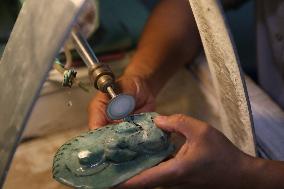
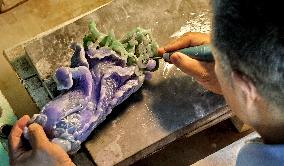
(240625) -- BEIJING, June 25, 2024 Photo by Xinhua/ABACAPRESS.COM) -- An artist makes a jade carving work at Zhang Tiecheng's studio in Beijing, capital of China, June 15, 2024. China's Jade carving art, which can date back to the Neolithic Age, reached its peak time in the Ming and Qing dynasties (1368-1911). The art was inscribed into the national intangible cultural heritage list in 2008. Selecting materials, designing and carving are the three major steps involved in jade carving. The craftsmen should have mastery in painting, carving and literature in order to complete an artwork, which is designed and carved according to the material itself and the aspiration of the artist. Most of the jade carving artworks convey auspicious meanings. Zhang Tiecheng, a master of the jade carving art born in Beijing in 1967, has devoted his love to traditional Chinese paintings since childhood. In 1987, he was enrolled in the Beijing Jade Articles Factory and became an apprentice of master Wang Yaotang. In his over 30 ye

  •  
(MASTER OF CRAFTS)CHINA-JADE CARVING-INHERITOR-STUDIO (CN)

(MASTER OF CRAFTS)CHINA-JADE CARVING-INHERITOR-STUDIO (CN)

(240625) -- BEIJING, June 25, 2024 Photo by Xinhua/ABACAPRESS.COM) -- An artist makes a jade carving work at Zhang Tiecheng's studio in Beijing, capital of China, June 15, 2024. China's Jade carving art, which can date back to the Neolithic Age, reached its peak time in the Ming and Qing dynasties (1368-1911). The art was inscribed into the national intangible cultural heritage list in 2008. Selecting materials, designing and carving are the three major steps involved in jade carving. The craftsmen should have mastery in painting, carving and literature in order to complete an artwork, which is designed and carved according to the material itself and the aspiration of the artist. Most of the jade carving artworks convey auspicious meanings. Zhang Tiecheng, a master of the jade carving art born in Beijing in 1967, has devoted his love to traditional Chinese paintings since childhood. In 1987, he was enrolled in the Beijing Jade Articles Factory and became an apprentice of master Wang Yaotang. In his over 30 ye

  •  
(MASTER OF CRAFTS)CHINA-JADE CARVING-INHERITOR-STUDIO (CN)

(MASTER OF CRAFTS)CHINA-JADE CARVING-INHERITOR-STUDIO (CN)

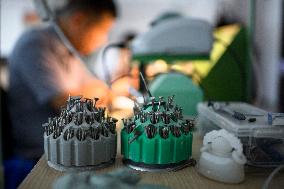
(240625) -- BEIJING, June 25, 2024 Photo by Xinhua/ABACAPRESS.COM) -- Carving tools are seen at Zhang Tiecheng's studio in Beijing, capital of China, June 15, 2024. China's Jade carving art, which can date back to the Neolithic Age, reached its peak time in the Ming and Qing dynasties (1368-1911). The art was inscribed into the national intangible cultural heritage list in 2008. Selecting materials, designing and carving are the three major steps involved in jade carving. The craftsmen should have mastery in painting, carving and literature in order to complete an artwork, which is designed and carved according to the material itself and the aspiration of the artist. Most of the jade carving artworks convey auspicious meanings. Zhang Tiecheng, a master of the jade carving art born in Beijing in 1967, has devoted his love to traditional Chinese paintings since childhood. In 1987, he was enrolled in the Beijing Jade Articles Factory and became an apprentice of master Wang Yaotang. In his over 30 years' career,

  •  
(MASTER OF CRAFTS)CHINA-JADE CARVING-INHERITOR-STUDIO (CN)

(MASTER OF CRAFTS)CHINA-JADE CARVING-INHERITOR-STUDIO (CN)

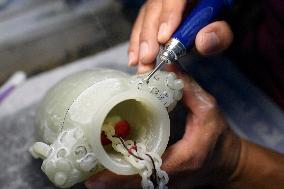
(240625) -- BEIJING, June 25, 2024 Photo by Xinhua/ABACAPRESS.COM) -- Zhang Tiecheng makes a jade carving work at his studio in Beijing, capital of China, June 15, 2024. China's Jade carving art, which can date back to the Neolithic Age, reached its peak time in the Ming and Qing dynasties (1368-1911). The art was inscribed into the national intangible cultural heritage list in 2008. Selecting materials, designing and carving are the three major steps involved in jade carving. The craftsmen should have mastery in painting, carving and literature in order to complete an artwork, which is designed and carved according to the material itself and the aspiration of the artist. Most of the jade carving artworks convey auspicious meanings. Zhang Tiecheng, a master of the jade carving art born in Beijing in 1967, has devoted his love to traditional Chinese paintings since childhood. In 1987, he was enrolled in the Beijing Jade Articles Factory and became an apprentice of master Wang Yaotang. In his over 30 years' car

  •  
(MASTER OF CRAFTS)CHINA-JADE CARVING-INHERITOR-STUDIO (CN)

(MASTER OF CRAFTS)CHINA-JADE CARVING-INHERITOR-STUDIO (CN)

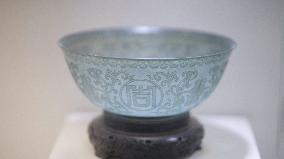
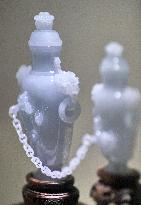
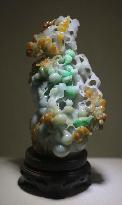
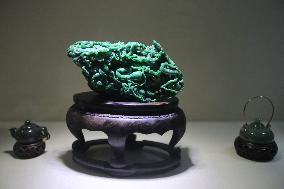
(240625) -- BEIJING, June 25, 2024 Photo by Xinhua/ABACAPRESS.COM) -- A jade carving artwork is displayed at Zhang Tiecheng's studio in Beijing, capital of China, June 15, 2024. China's Jade carving art, which can date back to the Neolithic Age, reached its peak time in the Ming and Qing dynasties (1368-1911). The art was inscribed into the national intangible cultural heritage list in 2008. Selecting materials, designing and carving are the three major steps involved in jade carving. The craftsmen should have mastery in painting, carving and literature in order to complete an artwork, which is designed and carved according to the material itself and the aspiration of the artist. Most of the jade carving artworks convey auspicious meanings. Zhang Tiecheng, a master of the jade carving art born in Beijing in 1967, has devoted his love to traditional Chinese paintings since childhood. In 1987, he was enrolled in the Beijing Jade Articles Factory and became an apprentice of master Wang Yaotang. In his over 30 ye

  •  
(MASTER OF CRAFTS)CHINA-JADE CARVING-INHERITOR-STUDIO (CN)

(MASTER OF CRAFTS)CHINA-JADE CARVING-INHERITOR-STUDIO (CN)

(240625) -- BEIJING, June 25, 2024 Photo by Xinhua/ABACAPRESS.COM) -- A jade carving artwork is displayed at Zhang Tiecheng's studio in Beijing, capital of China, June 15, 2024. China's Jade carving art, which can date back to the Neolithic Age, reached its peak time in the Ming and Qing dynasties (1368-1911). The art was inscribed into the national intangible cultural heritage list in 2008. Selecting materials, designing and carving are the three major steps involved in jade carving. The craftsmen should have mastery in painting, carving and literature in order to complete an artwork, which is designed and carved according to the material itself and the aspiration of the artist. Most of the jade carving artworks convey auspicious meanings. Zhang Tiecheng, a master of the jade carving art born in Beijing in 1967, has devoted his love to traditional Chinese paintings since childhood. In 1987, he was enrolled in the Beijing Jade Articles Factory and became an apprentice of master Wang Yaotang. In his over 30 ye

  •  
(MASTER OF CRAFTS)CHINA-JADE CARVING-INHERITOR-STUDIO (CN)

(MASTER OF CRAFTS)CHINA-JADE CARVING-INHERITOR-STUDIO (CN)

(240625) -- BEIJING, June 25, 2024 Photo by Xinhua/ABACAPRESS.COM) -- Zhang Tiecheng makes a jade carving work at his studio in Beijing, capital of China, June 15, 2024. China's Jade carving art, which can date back to the Neolithic Age, reached its peak time in the Ming and Qing dynasties (1368-1911). The art was inscribed into the national intangible cultural heritage list in 2008. Selecting materials, designing and carving are the three major steps involved in jade carving. The craftsmen should have mastery in painting, carving and literature in order to complete an artwork, which is designed and carved according to the material itself and the aspiration of the artist. Most of the jade carving artworks convey auspicious meanings. Zhang Tiecheng, a master of the jade carving art born in Beijing in 1967, has devoted his love to traditional Chinese paintings since childhood. In 1987, he was enrolled in the Beijing Jade Articles Factory and became an apprentice of master Wang Yaotang. In his over 30 years' car

  •  
(MASTER OF CRAFTS)CHINA-JADE CARVING-INHERITOR-STUDIO (CN)

(MASTER OF CRAFTS)CHINA-JADE CARVING-INHERITOR-STUDIO (CN)

(240625) -- BEIJING, June 25, 2024 Photo by Xinhua/ABACAPRESS.COM) -- An artist makes a jade carving work at Zhang Tiecheng's studio in Beijing, capital of China, June 15, 2024. China's Jade carving art, which can date back to the Neolithic Age, reached its peak time in the Ming and Qing dynasties (1368-1911). The art was inscribed into the national intangible cultural heritage list in 2008. Selecting materials, designing and carving are the three major steps involved in jade carving. The craftsmen should have mastery in painting, carving and literature in order to complete an artwork, which is designed and carved according to the material itself and the aspiration of the artist. Most of the jade carving artworks convey auspicious meanings. Zhang Tiecheng, a master of the jade carving art born in Beijing in 1967, has devoted his love to traditional Chinese paintings since childhood. In 1987, he was enrolled in the Beijing Jade Articles Factory and became an apprentice of master Wang Yaotang. In his over 30 ye

  •  
(MASTER OF CRAFTS)CHINA-JADE CARVING-INHERITOR-STUDIO (CN)

(MASTER OF CRAFTS)CHINA-JADE CARVING-INHERITOR-STUDIO (CN)

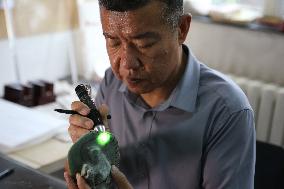
(240625) -- BEIJING, June 25, 2024 Photo by Xinhua/ABACAPRESS.COM) -- Zhang Tiecheng checks the quality of jade at his studio in Beijing, capital of China, June 15, 2024. China's Jade carving art, which can date back to the Neolithic Age, reached its peak time in the Ming and Qing dynasties (1368-1911). The art was inscribed into the national intangible cultural heritage list in 2008. Selecting materials, designing and carving are the three major steps involved in jade carving. The craftsmen should have mastery in painting, carving and literature in order to complete an artwork, which is designed and carved according to the material itself and the aspiration of the artist. Most of the jade carving artworks convey auspicious meanings. Zhang Tiecheng, a master of the jade carving art born in Beijing in 1967, has devoted his love to traditional Chinese paintings since childhood. In 1987, he was enrolled in the Beijing Jade Articles Factory and became an apprentice of master Wang Yaotang. In his over 30 years' ca

  •  
(MASTER OF CRAFTS)CHINA-JADE CARVING-INHERITOR-STUDIO (CN)

(MASTER OF CRAFTS)CHINA-JADE CARVING-INHERITOR-STUDIO (CN)

(240625) -- BEIJING, June 25, 2024 Photo by Xinhua/ABACAPRESS.COM) -- A jade carving artwork is displayed at Zhang Tiecheng's studio in Beijing, capital of China, June 15, 2024. China's Jade carving art, which can date back to the Neolithic Age, reached its peak time in the Ming and Qing dynasties (1368-1911). The art was inscribed into the national intangible cultural heritage list in 2008. Selecting materials, designing and carving are the three major steps involved in jade carving. The craftsmen should have mastery in painting, carving and literature in order to complete an artwork, which is designed and carved according to the material itself and the aspiration of the artist. Most of the jade carving artworks convey auspicious meanings. Zhang Tiecheng, a master of the jade carving art born in Beijing in 1967, has devoted his love to traditional Chinese paintings since childhood. In 1987, he was enrolled in the Beijing Jade Articles Factory and became an apprentice of master Wang Yaotang. In his over 30 ye

  •  
(MASTER OF CRAFTS)CHINA-JADE CARVING-INHERITOR-STUDIO (CN)

(MASTER OF CRAFTS)CHINA-JADE CARVING-INHERITOR-STUDIO (CN)

(240625) -- BEIJING, June 25, 2024 Photo by Xinhua/ABACAPRESS.COM) -- A jade carving artwork is displayed at Zhang Tiecheng's studio in Beijing, capital of China, June 15, 2024. China's Jade carving art, which can date back to the Neolithic Age, reached its peak time in the Ming and Qing dynasties (1368-1911). The art was inscribed into the national intangible cultural heritage list in 2008. Selecting materials, designing and carving are the three major steps involved in jade carving. The craftsmen should have mastery in painting, carving and literature in order to complete an artwork, which is designed and carved according to the material itself and the aspiration of the artist. Most of the jade carving artworks convey auspicious meanings. Zhang Tiecheng, a master of the jade carving art born in Beijing in 1967, has devoted his love to traditional Chinese paintings since childhood. In 1987, he was enrolled in the Beijing Jade Articles Factory and became an apprentice of master Wang Yaotang. In his over 30 ye

  •  
(MASTER OF CRAFTS)CHINA-JADE CARVING-INHERITOR-STUDIO (CN)

(MASTER OF CRAFTS)CHINA-JADE CARVING-INHERITOR-STUDIO (CN)

(240625) -- BEIJING, June 25, 2024 Photo by Xinhua/ABACAPRESS.COM) -- Zhang Tiecheng makes a jade carving work at his studio in Beijing, capital of China, June 15, 2024. China's Jade carving art, which can date back to the Neolithic Age, reached its peak time in the Ming and Qing dynasties (1368-1911). The art was inscribed into the national intangible cultural heritage list in 2008. Selecting materials, designing and carving are the three major steps involved in jade carving. The craftsmen should have mastery in painting, carving and literature in order to complete an artwork, which is designed and carved according to the material itself and the aspiration of the artist. Most of the jade carving artworks convey auspicious meanings. Zhang Tiecheng, a master of the jade carving art born in Beijing in 1967, has devoted his love to traditional Chinese paintings since childhood. In 1987, he was enrolled in the Beijing Jade Articles Factory and became an apprentice of master Wang Yaotang. In his over 30 years' car

  •  
(MASTER OF CRAFTS)CHINA-JADE CARVING-INHERITOR-STUDIO (CN)

(MASTER OF CRAFTS)CHINA-JADE CARVING-INHERITOR-STUDIO (CN)

(240625) -- BEIJING, June 25, 2024 Photo by Xinhua/ABACAPRESS.COM) -- A jade carving artwork is displayed at Zhang Tiecheng's studio in Beijing, capital of China, June 15, 2024. China's Jade carving art, which can date back to the Neolithic Age, reached its peak time in the Ming and Qing dynasties (1368-1911). The art was inscribed into the national intangible cultural heritage list in 2008. Selecting materials, designing and carving are the three major steps involved in jade carving. The craftsmen should have mastery in painting, carving and literature in order to complete an artwork, which is designed and carved according to the material itself and the aspiration of the artist. Most of the jade carving artworks convey auspicious meanings. Zhang Tiecheng, a master of the jade carving art born in Beijing in 1967, has devoted his love to traditional Chinese paintings since childhood. In 1987, he was enrolled in the Beijing Jade Articles Factory and became an apprentice of master Wang Yaotang. In his over 30 ye

  •  
(MASTER OF CRAFTS)CHINA-JADE CARVING-INHERITOR-STUDIO (CN)

(MASTER OF CRAFTS)CHINA-JADE CARVING-INHERITOR-STUDIO (CN)

(240625) -- BEIJING, June 25, 2024 Photo by Xinhua/ABACAPRESS.COM) -- Zhang Tiecheng makes a jade carving work at his studio in Beijing, capital of China, June 15, 2024. China's Jade carving art, which can date back to the Neolithic Age, reached its peak time in the Ming and Qing dynasties (1368-1911). The art was inscribed into the national intangible cultural heritage list in 2008. Selecting materials, designing and carving are the three major steps involved in jade carving. The craftsmen should have mastery in painting, carving and literature in order to complete an artwork, which is designed and carved according to the material itself and the aspiration of the artist. Most of the jade carving artworks convey auspicious meanings. Zhang Tiecheng, a master of the jade carving art born in Beijing in 1967, has devoted his love to traditional Chinese paintings since childhood. In 1987, he was enrolled in the Beijing Jade Articles Factory and became an apprentice of master Wang Yaotang. In his over 30 years' car

  •  
(MASTER OF CRAFTS)CHINA-JADE CARVING-INHERITOR-STUDIO (CN)

(MASTER OF CRAFTS)CHINA-JADE CARVING-INHERITOR-STUDIO (CN)

(240625) -- BEIJING, June 25, 2024 Photo by Xinhua/ABACAPRESS.COM) -- Zhang Tiecheng designs for a jade carving work at his studio in Beijing, capital of China, June 15, 2024. China's Jade carving art, which can date back to the Neolithic Age, reached its peak time in the Ming and Qing dynasties (1368-1911). The art was inscribed into the national intangible cultural heritage list in 2008. Selecting materials, designing and carving are the three major steps involved in jade carving. The craftsmen should have mastery in painting, carving and literature in order to complete an artwork, which is designed and carved according to the material itself and the aspiration of the artist. Most of the jade carving artworks convey auspicious meanings. Zhang Tiecheng, a master of the jade carving art born in Beijing in 1967, has devoted his love to traditional Chinese paintings since childhood. In 1987, he was enrolled in the Beijing Jade Articles Factory and became an apprentice of master Wang Yaotang. In his over 30 year

  •  
(MASTER OF CRAFTS)CHINA-JADE CARVING-INHERITOR-STUDIO (CN)

(MASTER OF CRAFTS)CHINA-JADE CARVING-INHERITOR-STUDIO (CN)

(240625) -- BEIJING, June 25, 2024 Photo by Xinhua/ABACAPRESS.COM) -- Zhang Tiecheng makes a jade carving work at his studio in Beijing, capital of China, June 15, 2024. China's Jade carving art, which can date back to the Neolithic Age, reached its peak time in the Ming and Qing dynasties (1368-1911). The art was inscribed into the national intangible cultural heritage list in 2008. Selecting materials, designing and carving are the three major steps involved in jade carving. The craftsmen should have mastery in painting, carving and literature in order to complete an artwork, which is designed and carved according to the material itself and the aspiration of the artist. Most of the jade carving artworks convey auspicious meanings. Zhang Tiecheng, a master of the jade carving art born in Beijing in 1967, has devoted his love to traditional Chinese paintings since childhood. In 1987, he was enrolled in the Beijing Jade Articles Factory and became an apprentice of master Wang Yaotang. In his over 30 years' car

  •  
(MASTER OF CRAFTS)CHINA-JADE CARVING-INHERITOR-STUDIO (CN)

(MASTER OF CRAFTS)CHINA-JADE CARVING-INHERITOR-STUDIO (CN)

(240625) -- BEIJING, June 25, 2024 Photo by Xinhua/ABACAPRESS.COM) -- Zhang Tiecheng makes a jade carving work at his studio in Beijing, capital of China, June 15, 2024. China's Jade carving art, which can date back to the Neolithic Age, reached its peak time in the Ming and Qing dynasties (1368-1911). The art was inscribed into the national intangible cultural heritage list in 2008. Selecting materials, designing and carving are the three major steps involved in jade carving. The craftsmen should have mastery in painting, carving and literature in order to complete an artwork, which is designed and carved according to the material itself and the aspiration of the artist. Most of the jade carving artworks convey auspicious meanings. Zhang Tiecheng, a master of the jade carving art born in Beijing in 1967, has devoted his love to traditional Chinese paintings since childhood. In 1987, he was enrolled in the Beijing Jade Articles Factory and became an apprentice of master Wang Yaotang. In his over 30 years' car

  • Main
  • Top
  • Editorial
  • Creative
  • About Us
  • About ILG
  • Terms of use
  • Company
  • BEHIND
  • Price List
  • Single Plan
  • Monthly Plan
  • Services
  • Shooting
  • Rights Clearance
  • Support
  • FAQ
  • How To Buy
  • Contact Us
  • Become a Partner

© KYODO NEWS IMAGES INC

All Rights Reserved.

  • Editorial
  • Olympics
  • News
  • Sports
  • Japan
  • Tech
  • Royal
  • Disaster
  • NorthKorea
  • Old Japan
  • SNS
  • Creative
  • Food
  • Japan
  • Landscape
  • Animal
  • Popular
  • #Ukraine
  • #China
  • #coronavirus
  • #N. Korea
  • #Thailand
  • #Russia
  • #Ukraine
  • #China
  • #coronavirus
  • #N. Korea
  • #Thailand
  • #Russia
  • Food
  • Japan
  • Landscape
  • Animal
  • Olympics
  • News
  • Sports
  • Japan
  • Tech
  • Royal
  • Disaster
  • NorthKorea
  • Old Japan
  • SNS